ISO 45001 Certification for Construction Companies in Ontario: A Complete Safety Management Guide for 2026
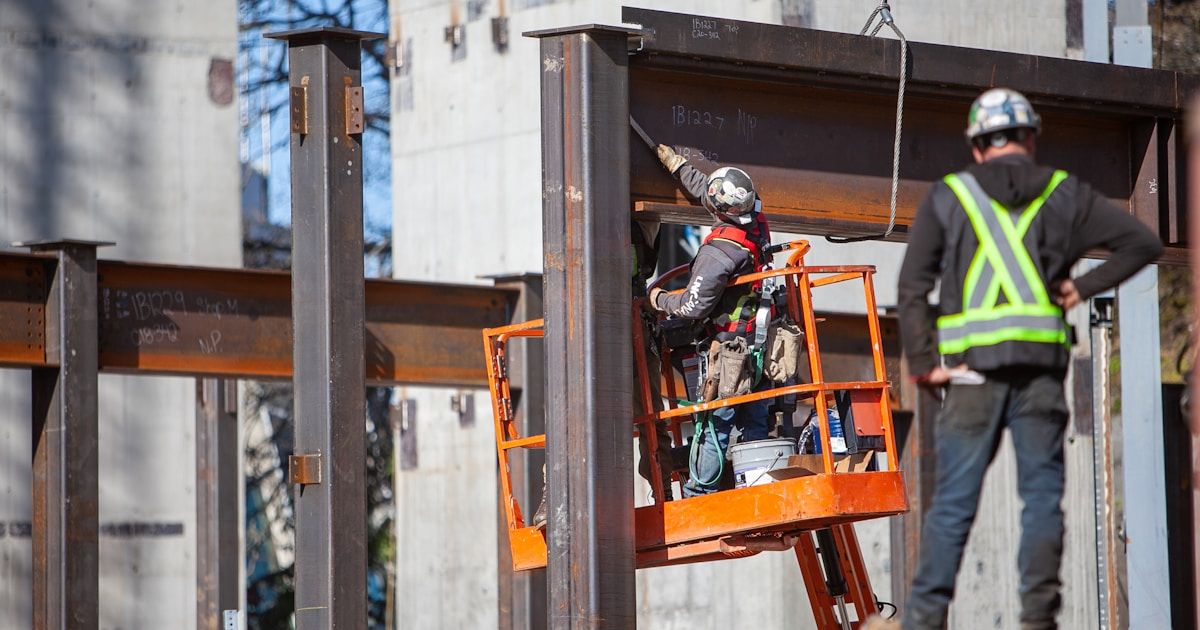
Ontario's construction sector remains one of the most hazardous industries in Canada. With over 500,000 workers employed across the province's building sites, safety incidents continue to generate significant human and financial costs. ISO 45001 certification provides construction companies with a structured framework for identifying hazards, managing risks, and driving continuous improvement in workplace safety performance — as outlined in the complete ISO 45001 certification guide for Canada.
Unlike basic compliance with Ontario's Occupational Health and Safety Act, ISO 45001 delivers a management system approach that integrates safety into daily operations rather than treating it as a checkbox exercise. For construction firms competing for major infrastructure projects, general contractor partnerships, and government tenders, certification signals a measurable commitment to worker protection that goes beyond minimum regulatory requirements.
Why ISO 45001 Matters for Ontario Construction
Construction consistently ranks among the top three industries for workplace fatalities and critical injuries in Ontario. The province's Workplace Safety and Insurance Board data shows that construction accounts for a disproportionate share of lost-time injury claims relative to its workforce size.
ISO 45001:2018 replaces the older OHSAS 18001 standard and introduces several requirements that directly address construction-specific challenges. The standard demands systematic hazard identification across changing work environments, worker consultation at every level, and leadership accountability for safety outcomes.
Competitive Advantages Beyond Compliance
For construction companies in Ontario, ISO 45001 certification delivers tangible business benefits that extend far beyond regulatory compliance:
- Lower WSIB premiums through demonstrated risk reduction and fewer lost-time claims under WSIB's Excellence Program
- Preferred contractor status on major infrastructure projects where safety management systems are a prequalification requirement
- Reduced project delays caused by safety incidents, stop-work orders, and Ministry of Labour investigations
- Improved worker retention in a tight labor market where skilled tradespeople prioritize safe employers
- Stronger subcontractor management through standardized safety expectations across the supply chain
Many Ontario general contractors and project owners now require ISO 45001 certification or an equivalent safety management system as a condition of contract. Infrastructure Ontario, Metrolinx, and several large municipal procurement programs include safety management system requirements in their prequalification criteria. Hamilton's steel and heavy manufacturing sector has seen similar demand, as covered in the ISO 45001 guide for Hamilton manufacturers.
Key Requirements for Construction Organizations
ISO 45001 follows the Annex SL high-level structure shared by ISO 9001 and ISO 14001, making it straightforward to integrate into an existing management system. However, several clauses require construction-specific interpretation.
Context and Leadership (Clauses 4-5)
Construction organizations must identify the specific occupational health and safety context of their operations. This includes the physical environments where work occurs (which change project to project), the regulatory framework under the OHSA and Ontario Regulation 213/91 for construction projects, and the needs and expectations of workers, subcontractors, clients, and regulators.
Top management must demonstrate leadership by establishing an OH&S policy, assigning safety responsibilities, and ensuring that adequate resources are allocated to the safety management system. In construction, this means site-level accountability structures that function across multiple active projects simultaneously.
Hazard Identification and Risk Assessment (Clause 6)
This is where ISO 45001 delivers the most value for construction companies. The standard requires a systematic process for identifying hazards, assessing risks, and determining controls — not just at the planning stage, but continuously as work conditions change. The Infrastructure Health and Safety Association provides construction-specific guidance that aligns well with ISO 45001 risk assessment requirements.
Construction-specific hazards that the system must address include:
- Working at heights — falls remain the leading cause of construction fatalities in Ontario
- Struck-by hazards — equipment, falling objects, and vehicle interactions on active sites
- Electrical hazards — contact with overhead and underground utilities
- Excavation and trenching — collapse risks, atmospheric hazards in confined spaces
- Musculoskeletal hazards — repetitive strain, manual handling of heavy materials
- Exposure hazards — silica dust, asbestos in renovation/demolition, noise, extreme temperatures
The risk assessment must produce a hierarchy of controls: elimination first, then substitution, engineering controls, administrative controls, and personal protective equipment as a last resort. Ontario's constructor obligations under OHSA align well with this hierarchy, creating natural integration points.
Operational Planning and Control (Clause 8)
Clause 8 requires construction organizations to plan, implement, and control processes needed to meet OH&S requirements. For construction, this translates into:
- Project-level safety plans that are developed before mobilization and updated as work progresses
- Contractor and subcontractor management procedures that ensure all parties on site operate within the safety management system
- Emergency preparedness plans tailored to each project site, including evacuation routes, muster points, and communication protocols
- Management of change processes that capture safety implications when project scope, schedule, or methods change
- Procurement controls that verify equipment, materials, and PPE meet safety specifications
The standard also requires organizations to address how safety is maintained during non-routine activities and foreseeable emergency situations — particularly relevant for construction where project conditions shift daily.
Performance Evaluation and Improvement (Clauses 9-10)
ISO 45001 requires construction organizations to monitor, measure, analyze, and evaluate OH&S performance. Key metrics for construction companies typically include:
- Lost-time injury frequency rate (LTIFR) and total recordable incident rate (TRIR)
- Near-miss reporting rates and close-out timelines
- Safety inspection completion rates across active projects
- Training completion and competency verification
- Corrective action effectiveness and closure rates — using a structured corrective action process
Internal audits must be conducted at planned intervals using a comprehensive internal audit checklist, and management reviews must evaluate the continuing suitability, adequacy, and effectiveness of the safety management system. For multi-project construction firms, this means auditing safety performance at both the corporate level and individual project sites.
Implementation Roadmap for Construction Firms
Achieving ISO 45001 certification typically takes 6 to 12 months for a mid-size construction company, depending on existing safety maturity. A realistic implementation timeline follows these stages:
Months 1-2: Gap Analysis and Planning
A thorough gap analysis compares current safety practices against ISO 45001 requirements. Most Ontario construction companies already have elements of a safety program in place — OHSA compliance documentation, WSIB requirements, COR (Certificate of Recognition) programs, or IHSA-aligned safety procedures.
The gap analysis identifies what exists, what needs to be formalized, and what needs to be built from scratch. This stage also establishes the project timeline, resource requirements, and management commitment.
Months 3-6: Documentation and System Build
This is the heaviest implementation period. Key deliverables include:
- OH&S policy and objectives aligned with business strategy
- Hazard identification and risk assessment procedures (with construction-specific templates)
- Operational control procedures for high-risk activities (working at heights, confined spaces, hot work, crane operations)
- Contractor management and site orientation procedures
- Emergency response plans (template-based for each project type)
- Incident investigation and corrective action procedures
- Document control and records management system
- Internal audit program and schedule
Construction organizations that already hold ISO 9001 certification can leverage existing document control, internal audit, and management review processes, significantly reducing implementation effort.
Months 7-9: Implementation and Training
Safety management system documentation is deployed across active projects. Site supervisors, project managers, and safety coordinators receive role-specific training on:
- New procedures and forms
- Hazard identification and reporting requirements
- Incident investigation methodology
- Internal audit techniques
- Worker consultation and participation mechanisms
A critical success factor at this stage is engaging frontline workers — carpenters, electricians, ironworkers, and laborers — in the system rather than imposing it from above. ISO 45001 explicitly requires worker consultation and participation at all levels, which aligns with construction's joint health and safety committee requirements under OHSA.
Months 10-12: Internal Audit and Certification
At least one full internal audit cycle must be completed before the certification audit. Internal auditors evaluate whether the system is implemented as documented and whether safety outcomes are improving.
The certification audit is conducted by an accredited certification body recognized by the Standards Council of Canada (such as BSI, SGS, Bureau Veritas, or QMI-SAI Global) in two stages:
- Stage 1 (documentation review): Auditors verify that the system documentation meets ISO 45001 requirements
- Stage 2 (implementation audit): Auditors visit project sites and the head office to verify that the system is implemented, effective, and producing results
Most construction companies achieve certification within 12 months of starting implementation, with the timeline extending for organizations that need to build significant safety infrastructure from the ground up.
Need guidance on your certification journey?
Our consultants have prepared more than 250 manufacturers globally — from growing businesses to large enterprises — for successful certification. Get a free, no-obligation consultation tailored to your industry.
Costs and ROI for Ontario Construction Companies
Certification costs vary based on company size, number of active projects, and existing safety maturity. For a detailed breakdown of how ISO certification pricing works in Canada, the ISO 9001 certification cost guide covers the general framework that applies across standards:
- Consulting and implementation support: ,000 to ,000 for a mid-size constructor (50-200 employees)
- Certification audit fees: ,000 to ,000 depending on company size and number of sites
- Annual surveillance audits: ,000 to ,000 per year
- Internal resources: A dedicated safety coordinator or manager is typically required
The return on investment is driven by reduced WSIB premiums (which can decrease 10-30% through WSIB's Excellence Program and Safety Groups incentive programs), fewer project delays from safety incidents, and access to contracts that require certified safety management systems.
For construction firms bidding on public infrastructure projects across Ontario, the certification investment often pays for itself through a single contract win that was only accessible to certified bidders.
Integration with Other Management Standards
Many Ontario construction companies pursue an integrated management system that combines ISO 45001 with ISO 9001 (quality management) and ISO 14001 (environmental management). The ISO 14001 environmental compliance guide for Ontario manufacturers covers the environmental side of this integration in depth. The shared Annex SL structure makes this integration practical:
- A single management review covers quality, safety, and environmental performance
- One internal audit program covers all three standards
- Document control, training, and corrective action processes serve all systems
- Contractor management procedures address quality, safety, and environmental requirements simultaneously
For firms deciding which standard to implement first, the ISO 9001 vs ISO 14001 comparison provides a useful framework for sequencing certifications based on business priorities.
This integrated approach reduces administrative burden and audit fatigue while delivering a comprehensive management system that addresses the full range of construction project requirements.
Getting Started with ISO 45001 Certification
Ontario construction companies ready to pursue ISO 45001 certification should begin with a gap analysis that maps current safety practices against the standard's requirements. This establishes a clear baseline and realistic timeline for implementation.
The most successful implementations combine external consulting expertise with strong internal commitment from project managers and site supervisors. A management system that exists only in binders at head office delivers no value — the system must be embedded in how projects are planned, executed, and closed out.
For construction firms already holding COR certification through the IHSA or maintaining safety programs aligned with OHSA requirements, the path to ISO 45001 is shorter than it might appear. Many existing practices already satisfy portions of the standard — the gap analysis identifies exactly where additional effort is needed.
Contact a certification specialist to discuss the specific requirements for construction organizations and receive a tailored implementation timeline based on current safety maturity.
Request a Consultation
Fill in your details and we'll get back to you.