ISO 45001 Certification in Hamilton, Ontario: The Complete Guide for Steel and Heavy Manufacturing in 2026
Why Hamilton's Steel and Heavy Manufacturing Sector Needs ISO 45001 Certification
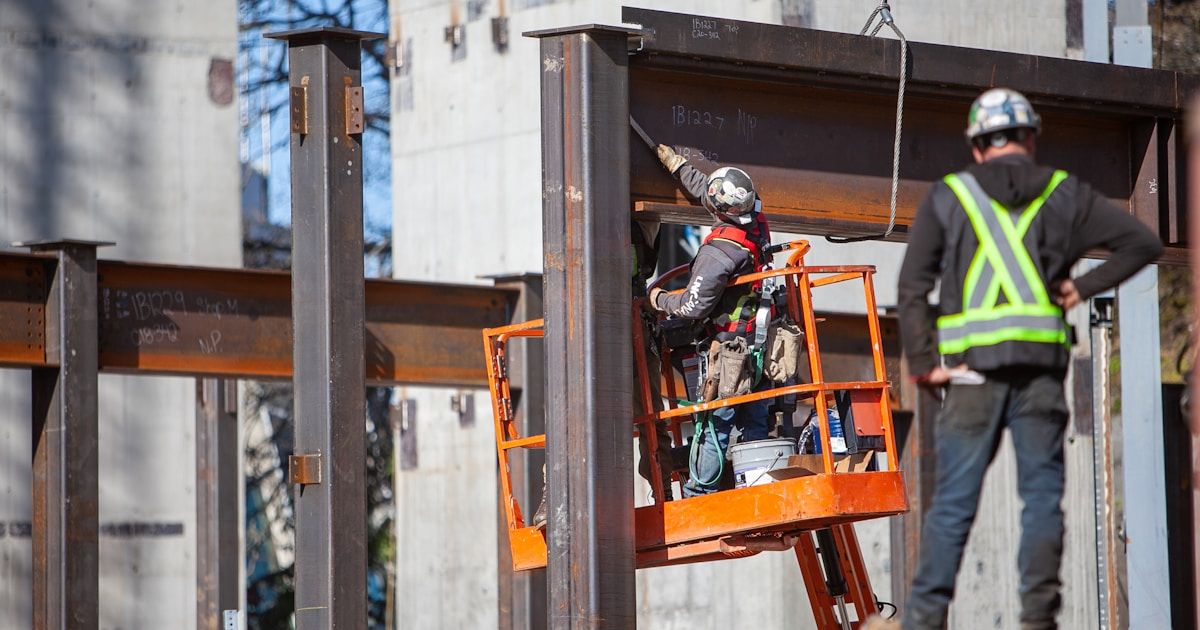
Hamilton, Ontario has earned its reputation as the steel capital of Canada through more than a century of heavy manufacturing. Home to ArcelorMittal Dofasco, Stelco, and dozens of specialized fabricators along the Burlington Street industrial corridor, the city's economy depends on an industry where workplace safety is existential. ISO 45001 certification in Hamilton, Ontario represents a strategic commitment for manufacturers operating in one of the most hazard-intensive sectors in the country.
Ontario's Workplace Safety and Insurance Board (WSIB) consistently ranks steel production, metal fabrication, and heavy equipment manufacturing among the highest-risk industry classifications. Lost-time injuries in Hamilton's industrial zone have historically exceeded provincial averages, driven by exposure to molten metal, overhead crane operations, confined space work, and heavy material handling. ISO 45001 certification provides a structured, internationally recognized framework for reducing those risks systematically rather than relying on reactive safety measures.
Hamilton manufacturers pursuing ISO 45001 certification also gain measurable business advantages. ArcelorMittal Dofasco, the city's largest private employer, has implemented rigorous contractor safety qualification programs that align directly with ISO 45001 requirements. Manufacturers that hold certification gain preferred status in these supply chains — and those that do not risk exclusion from major contracts. The Port of Hamilton, one of the busiest inland ports in Canada, adds further complexity — companies involved in steel logistics and port-side manufacturing face unique hazards that ISO 45001 addresses through its risk-based approach to operational planning and control. ISO 45001 certification in Hamilton, Ontario is no longer simply a differentiator; for serious manufacturers, it has become a baseline expectation across the heavy industry supply chain. Hamilton Economic Development actively promotes the city as a hub for advanced manufacturing and supports companies seeking to strengthen their operational credentials.
Understanding ISO 45001 and Its Relevance to Hamilton's Industrial Landscape
ISO 45001:2018 is the international standard for occupational health and safety management systems. It replaced OHSAS 18001 and introduced a High-Level Structure (HLS) that aligns with ISO 9001 and ISO 14001, making integration across management systems practical for manufacturers running multiple certifications simultaneously.
The standard follows a Plan-Do-Check-Act cycle and requires organizations to establish, implement, maintain, and continually improve an OH&S management system. For Hamilton steel and heavy manufacturing operations, the risk-based thinking approach under Clause 6.1 is particularly significant — each organization must identify its own unique hazards, assess associated risks, and implement controls proportional to those risks rather than following generic checklists.
How ISO 45001 Maps to Steel Manufacturing Hazards
Hamilton's steel industry presents a hazard profile that ISO 45001 was designed to address. Clause 6.1.2 requires hazard identification that accounts for routine and non-routine activities, emergency situations, and human factors influencing safety outcomes. In a steel mill or fabrication shop, this means systematically cataloging hazards from blast furnace operations, rolling mill processes, welding and cutting, overhead crane movements, and chemical exposure from coatings and surface treatments.
Clause 8.1 on operational planning and control requires documented procedures for managing these identified hazards. Clause 8.1.2 specifically addresses the elimination of hazards and reduction of OH&S risks using the hierarchy of controls — elimination, substitution, engineering controls, administrative controls, and personal protective equipment. For a Hamilton fabricator handling structural steel beams, this hierarchy determines whether a hazard is engineered out of the process entirely or managed through training and PPE.
The standard's emphasis on worker consultation and participation under Clause 5.4 resonates strongly in Hamilton, where unionized workplaces and joint health and safety committees have a long tradition. ISO 45001 builds on this foundation by requiring top management to establish mechanisms for worker input on OH&S policy, hazard identification, and the planning of changes that affect workplace safety.
The Steelcity Fabrication Example: A Hamilton Manufacturer's Certification Journey
Consider Steelcity Fabrication, a fictional Hamilton-based structural steel manufacturer operating from a 60,000-square-foot facility near the GO Transit industrial corridor between Hamilton and Burlington. The company employs 85 workers across two shifts, fabricating steel components for commercial construction projects throughout Southern Ontario.
Context Analysis and Gap Assessment
Steelcity Fabrication began with Clause 4.1, understanding its organizational context. External factors included Ontario's Occupational Health and Safety Act (OHSA), WSIB reporting requirements, Ministry of Labour inspection protocols, municipal bylaws governing industrial noise and emissions, and the expectations of general contractors awarding fabrication contracts. Internal context covered workforce demographics, equipment age and condition, existing safety programs, and the physical layout of the facility.
The gap analysis revealed strong compliance in PPE provision and incident reporting, but significant gaps in hazard identification methodology, management of change procedures, and procurement controls for contractor safety management.
Building the OH&S Management System
Clause 5.1 required demonstrated leadership commitment — the company president issued an OH&S policy, established safety objectives aligned with strategic direction, and allocated implementation budget. Clause 7.2 on competence required role-specific assessments for crane operators, welders, material handlers, quality inspectors, and supervisors. Where gaps existed — particularly in confined space rescue procedures and lockout/tagout verification — targeted training was delivered before operational controls took effect.
Need guidance on your certification journey?
Our consultants have prepared more than 250 manufacturers globally — from growing businesses to large enterprises — for successful certification. Get a free, no-obligation consultation tailored to your industry.
The operational controls under Clause 8.1 translated into documented procedures for every high-risk activity: hot work permits, crane lift plans, fall protection protocols, electrical isolation procedures, and chemical handling instructions. Each procedure identified specific hazards, required controls, competency requirements, and emergency response steps.
The Certification Audit
The certification body conducted a two-stage audit. Stage 1 reviewed documentation and confirmed readiness for the on-site assessment. Stage 2 involved auditors spending three days on the shop floor, interviewing workers, observing operations, reviewing records, and evaluating the effectiveness of implemented controls. Auditors focused heavily on evidence of worker participation — confirming that safety concerns were raised and addressed through the joint health and safety committee, and that management reviews monitored leading indicators like near-miss reports and safety observation tours alongside lagging indicators like injury rates.
Cost and Timeline for ISO 45001 Certification in Hamilton
The total cost for a mid-sized Hamilton steel fabricator or heavy manufacturer typically ranges from $15,000 to $45,000, depending on organizational size, complexity, and the current state of existing safety programs.
Investment Breakdown
Consulting support for gap analysis, system development, and implementation represents the largest cost component, ranging from $8,000 to $25,000 for companies with 50 to 150 employees. Organizations with mature safety programs already aligned with Ontario's OHSA requirements will fall toward the lower end. Certification body audit fees for the initial two-stage audit run between $5,000 and $12,000 — steel manufacturing's high-risk classification increases minimum audit duration under International Accreditation Forum tables. Internal costs include staff time for system development, training delivery, and internal auditing; many Hamilton manufacturers assign a dedicated OH&S management representative who commits 50 to 70 percent of their time during the build phase.
Implementation Timeline
The typical timeline runs 8 to 14 months: gap analysis and planning takes 4 to 6 weeks, system documentation development takes 8 to 12 weeks, implementation and employee training takes 10 to 16 weeks, and internal audits and management review take 4 to 6 weeks before the certification audit. Organizations already holding ISO 9001 or ISO 14001 can accelerate to as few as 6 months by leveraging existing management system infrastructure through the shared High-Level Structure.
Hamilton-Specific Regulatory Alignment and WSIB Benefits
ISO 45001 certification in Hamilton, Ontario carries particular weight because the standard aligns closely with provincial regulatory requirements. Ontario's OHSA establishes the legal baseline, but ISO 45001 builds a systematic framework around it, ensuring consistent compliance rather than reactive responses to Ministry of Labour inspections.
WSIB Premium Reduction Programs
The WSIB's Health and Safety Excellence Program rewards employers who implement targeted safety improvements, and ISO 45001 certification provides the systematic evidence that WSIB assessors look for. The program evaluates safety culture, hazard management, and incident prevention — areas where a certified OH&S management system provides documented proof of effectiveness. Hamilton steel manufacturers carry high WSIB premium rates due to industry risk classification. Steelcity Fabrication, after certification and implementing the continual improvement process under Clause 10.2, documented a 35 percent reduction in recordable injuries within 18 months — directly impacting WSIB experience rating calculations and generating meaningful premium savings.
Ministry of Labour Inspection Readiness
Ontario's Ministry of Labour, Immigration, Training and Skills Development conducts both scheduled and surprise inspections of industrial workplaces. Hamilton's heavy manufacturing concentration means inspectors are familiar with the specific hazards of steel fabrication and hold operations to rigorous standards. Companies with ISO 45001 certification maintain current documented procedures, training records, hazard assessments, and incident investigation files — rather than assembling documentation hastily when an inspector arrives at the facility gate.
Selecting a Certification Body and Consultant in Hamilton
Certification Body Criteria
The certification body must be accredited by the Standards Council of Canada (SCC) or an equivalent International Accreditation Forum member. Key evaluation criteria include experience auditing steel and heavy manufacturing operations, auditor qualifications, scheduling flexibility to accommodate shift operations, and clarity of the surveillance audit program. Certification follows a three-year cycle: initial certification in year one, surveillance audits in years two and three under Clause 9.1, and recertification in year four.
Implementation Consultant Selection
Steel manufacturing presents unique hazards — molten metal splash, crane load failures, silica dust exposure, noise-induced hearing loss, and thermal stress — that require practical understanding beyond general ISO knowledge. The consultant should have verifiable experience implementing OH&S management systems in steel, metals, or heavy manufacturing environments. Hamilton's proximity to the Greater Toronto Area provides access to a strong pool of qualified consultants, and McMaster University's occupational health and safety research programs create a knowledge ecosystem that benefits local manufacturers. The Board of Canadian Registered Safety Professionals (BCRSP) maintains registries to help identify qualified professionals in the region.
Integrating ISO 45001 with Existing Management Systems
Many Hamilton manufacturers already hold ISO 9001 (quality) and ISO 14001 (environmental) certifications. The shared High-Level Structure means approximately 40 to 50 percent of ISO 45001 documentation already exists in a certified ISO 9001 organization. Common elements include context of the organization (Clause 4), leadership and worker participation (Clause 5), planning (Clause 6), support including competence and documented information (Clause 7), performance evaluation including internal audit and management review (Clause 9), and improvement (Clause 10).
An integrated management system addresses quality, environmental, and safety requirements within a single framework, reducing the total audit burden from three separate certification audits to one integrated assessment that covers all standards simultaneously. This integration can reduce certification body fees by 20 to 30 percent and significantly cut the internal time commitment for audit preparation across all three management system standards.
Maintaining Certification and Driving Continual Improvement
Achieving ISO 45001 certification is the starting point, not the finish line. The continual improvement requirements under Clause 10 mean Hamilton steel manufacturers must demonstrate ongoing enhancement of OH&S performance through systematic monitoring and review.
Clause 9.1 performance monitoring in a steel manufacturing environment goes beyond tracking injury rates. Leading indicators — near-miss reports, safety observation completion rates, corrective action closure times, training completion percentages, and hazard identification volumes — provide predictive insight into safety performance trends. Steelcity Fabrication implemented a digital dashboard tracking 12 leading indicators across both shifts, providing real-time visibility that drives proactive safety management.
Clause 9.2 requires planned internal audits at regular intervals. Hamilton manufacturers should maintain a pool of cross-trained internal auditors who understand both ISO 45001 requirements and the specific hazards of steel and heavy manufacturing operations. Clause 9.3 management reviews should evaluate changing external factors — new OHSA regulations, evolving customer safety requirements, and industry incident trends — alongside internal performance data. The review outputs, including decisions on resource allocation and system changes, demonstrate the leadership commitment that certification auditors evaluate during annual surveillance visits.
ISO 45001 certification in Hamilton, Ontario positions steel and heavy manufacturers for sustained competitiveness in a market that increasingly views occupational health and safety performance as a measure of operational excellence. The city's industrial heritage, combined with modern management system methodology, creates an opportunity for Hamilton manufacturers to lead in both productivity and safety performance.
Request a Consultation
Fill in your details and we'll get back to you.