
ISO 13485 Certification for Boston Medical Device Manufacturers
Boston sits at the heart of the largest medical device cluster in the United States — a corridor stretching from Cambridge and Waltham through Marlborough and Andover, with global names (Boston Scientific, Medtronic, Abbott, Smith+Nephew, Hologic, Stryker) and a thick tier of contract manufacturers, component suppliers, and emerging device startups serving the Class I, II, and III medical device markets. For every operation in this ecosystem, ISO 13485:2016 is the entry credential. Health Canada Medical Devices Regulations, the FDA Quality Management System Regulation (QMSR — replacing 21 CFR Part 820 effective February 2026), and the EU MDR all align with ISO 13485, so a single certified system unlocks North American and European market access.
PinnacleQMS helps Boston-area medical device manufacturers earn ISO 13485 certification cleanly: with an AI-powered compliance platform configured for medical device file structure, an accredited domain expert with FDA and Health Canada audit experience, and a dedicated project manager who stays through Stage 2 and the first MDSAP surveillance. This page covers how the process works in the Massachusetts market, what it costs in US dollars, and what to expect from an ANAB-accredited registrar audit covering the QMSR transition layer.
Why ISO 13485 matters for Boston medical device manufacturers
The Massachusetts medical device cluster operates under one of the densest regulatory environments in North America. FDA QMSR (effective February 2026, replacing 21 CFR Part 820), Health Canada MDR, EU MDR for European market access, and customer-imposed requirements (hospital systems, GPOs, foreign distributors) layer on top of a base ISO 13485:2016 certificate. For Boston-area manufacturers — Cambridge biotech spinouts, Waltham contract manufacturers, Marlborough surgical instrument makers, North Andover diagnostic device producers — ISO 13485 is the framework that ties every regulatory and customer obligation into one auditable system.
- FDA QMSR alignment. The FDA's transition from 21 CFR Part 820 to QMSR (final rule January 2024, effective February 2026) explicitly incorporates ISO 13485:2016 by reference. A manufacturer holding a current ISO 13485 certificate from an accredited registrar is roughly 90% compliant with QMSR on day one.
- MDSAP single-audit program. Manufacturers selling into the US, Canada, Brazil, Australia, and Japan can satisfy all five regulator inspections with one MDSAP audit conducted by an authorized auditing organization — far cheaper than five separate inspections per year.
- Hospital and GPO purchase requirements. Boston-area hospitals (Mass General Brigham, Beth Israel Deaconess, Tufts Medical Center) and Group Purchasing Organizations expect ISO 13485 certification on supplier audits. Without it, the bid process stalls.
- EU market access via the EU MDR. ISO 13485 is the foundation for the technical documentation submission and Notified Body assessment that grants the CE mark.
- Investor and acquirer due diligence. Series B and beyond medical device startups in the Boston ecosystem face quality system due diligence in every funding round and acquisition. ISO 13485 satisfies the baseline ask.
If your customers, regulators, investors, or distribution partners have started asking about ISO 13485, this page is for you.
Common ISO 13485 implementation challenges in the Boston ecosystem
Boston-area medical device manufacturers tend to share a few patterns that make ISO 13485 implementation more complex than the textbook rollout suggests. PinnacleQMS consultants have seen these on Massachusetts shop floors and cleanroom corridors:
- Design-first culture meets manufacturing discipline. Cambridge and Waltham startups often grow from prototype to first commercial product without ever building a full design history file (DHF) under ISO 13485 clause 7.3 or formal design controls under FDA QSR/QMSR. Backfilling the DHF after the fact is harder than building it concurrently.
- Class II vs Class III scope decisions. ISO 13485 covers all device classes; the depth of risk management (per ISO 14971), validation, and post-market surveillance scales sharply with class. Manufacturers serving multiple classes (a Class II cleared device + a Class III pipeline) need a unified system, not two parallel ones.
- Contract manufacturer and supplier qualification. Most Boston-area device companies outsource at least one critical process — molding, machining, sterilization, packaging, kitting. ISO 13485 clause 7.4 (purchasing) and FDA QMSR require documented supplier evaluation, approval, and ongoing performance monitoring that many startup operations underbuild.
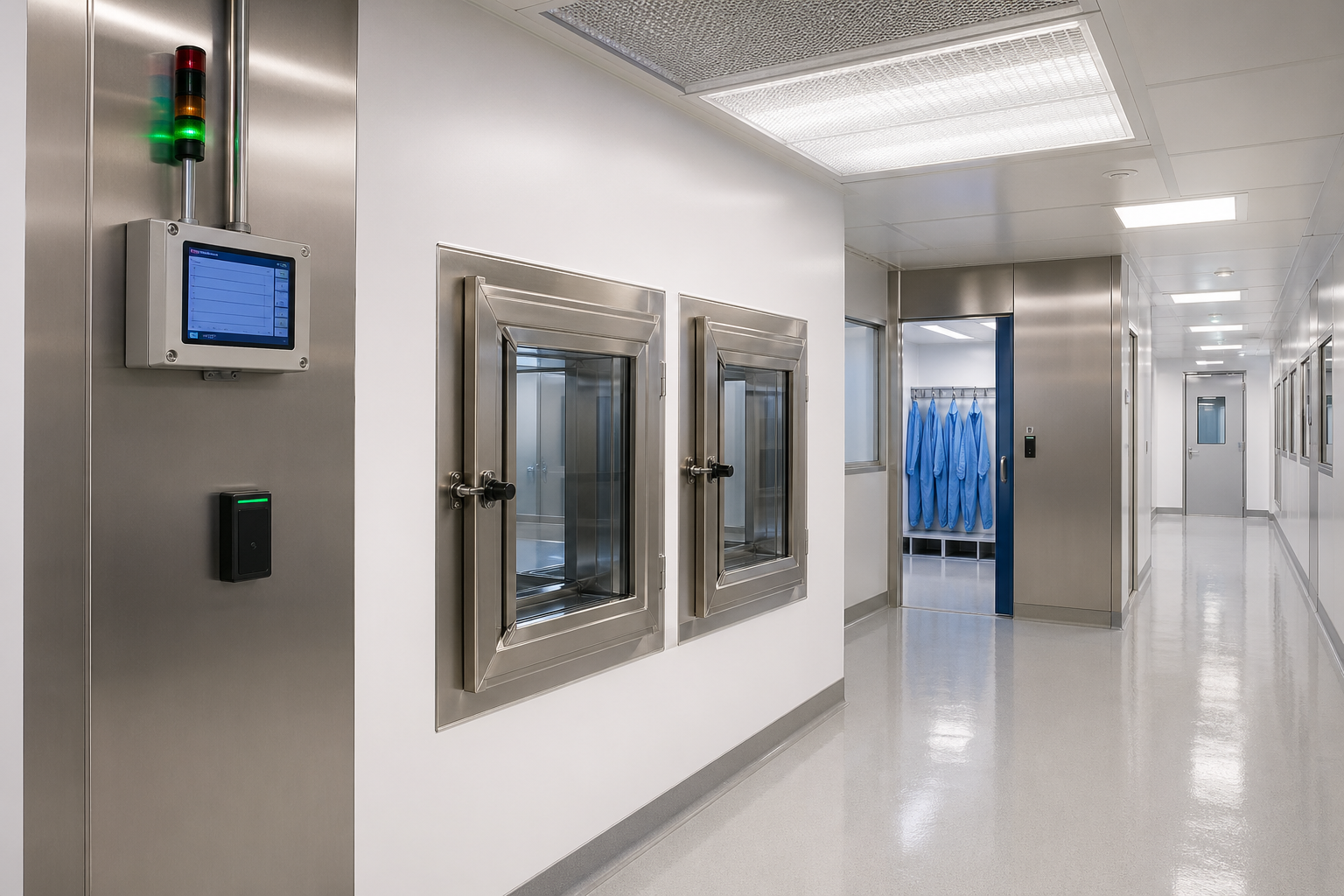
- Cleanroom validation and environmental monitoring. ISO Class 7 and Class 8 cleanrooms (typical for Class II surgical instruments and implantables) require qualified validation protocols, documented monitoring programs (viable and non-viable particle counts, pressure differentials, recovery rates), and trended data feeding management review.
- Sterilization and biocompatibility data. EO sterilization cycles, gamma irradiation, autoclaving, and gas plasma all require validated cycles per ISO 11135, ISO 11137, and ISO 17665 respectively. Biocompatibility data must follow ISO 10993. ISO 13485 alone does not contain these specifics — but auditors expect them in the QMS.
The platform handles each at the system level, and the consultant-led implementation makes sure the documentation matches reality on the floor and in the cleanroom.
Our 6-stage certification process
Whether the operation is a Class II contract manufacturer migrating from informal quality practices or a Class III implantable startup pursuing first commercial certification, the path moves through six stages. The full walk-through is on the main process page; here is the Boston-specific summary.
- Gap assessment. An accredited auditor with FDA QMSR and Health Canada MDR audit experience visits the Boston facility (or audits remotely with live video). The output is a clause-by-clause report against ISO 13485:2016 with a compliance score, a gap list against QMSR transition obligations, and a prioritised action list mapped to existing regulatory submissions.
- Risk management and design controls baseline. Specific to medical device implementations. ISO 14971 risk management file, design control procedures (per clause 7.3), and the design history file structure get scoped before documentation work begins.
- QMS design and documentation build. The platform generates draft policies, procedures, work instructions, and the Medical Device File structure tailored to the device class and regulatory profile. Existing 510(k), De Novo, or PMA submission documentation gets folded into the QMS rather than running in parallel.
- Implementation and training. Operators, design engineers, regulatory affairs, complaint handlers, and management get role-specific training. Records pull into the platform so the audit trail starts the day the system goes live.
- Internal audit and management review. Before the registrar arrives, our team conducts a full internal audit and runs a management review. Findings are closed; corrective actions documented; CAPA effectiveness verified.
- Certification audit. Stage 1 (documentation) and Stage 2 (on-site) audits are conducted by an ANAB-accredited registrar with medical device authorization — typically with a Massachusetts or remote auditor. We sit in. Across 250+ certifications, the first-attempt pass rate is 98%.
Total elapsed time depends on facility size, current QMS maturity, device class, and audit scheduling — most Boston-area implementations land between six and twelve months from gap to certificate. Class III devices and combination products typically sit at the higher end.
Industries we work with in the Boston area
Our client base in the Massachusetts medical device cluster spans the full spectrum of FDA-regulated device manufacturing. The certification process is the same; the technical content of the QMS varies sharply by device class and product family.
- Class II surgical instruments and devices. Reusable and single-use surgical tools, catheters, electrosurgical accessories — the largest segment by volume. Cleanroom validation, sterilization, and biocompatibility are the heaviest lift.
- Class III implantables and life-supporting devices. Cardiovascular implants, neurostimulation, structural heart, drug-eluting devices. Design controls, biocompatibility data (ISO 10993), and clinical evaluation requirements scale dramatically.
- In-vitro diagnostics (IVD). Lab analyzers, point-of-care diagnostic devices, molecular assays. ISO 13485 plus IVDR (EU) plus CLIA-related requirements layer on top of the base certification.
- Orthopedic and dental devices. Joint implants, dental implants, surgical guides. Often combined with ISO 14001 environmental certification due to manufacturing processes (machining, polishing, finishing).
- Drug-device combination products. Pre-filled syringes, autoinjectors, drug-coated stents — increasingly common in Cambridge biotech spinouts. Requires ISO 13485 alongside cGMP for the drug component.
- Contract manufacturers. Waltham and Marlborough contract manufacturing organizations serving multiple device companies. ISO 13485 plus customer-specific quality agreements for each principal.
For the deeper view across all medical device segments, see the healthcare and medical devices industry page.
ISO 13485 certification cost and timeline in Boston
Costs in the Boston market fall into three buckets: consulting and platform on the implementation side, registrar fees on the audit side, and any clinical/biocompatibility data generation surfaced during the gap assessment. The realistic ranges in US dollars:
- Implementation (consulting + platform): typically US$25,000 – US$75,000 depending on facility size, employee count, device class, current QMS maturity, and design-control burden. A Class II contract manufacturer with 50 employees and existing 21 CFR Part 820 alignment lands at the lower end; a Class III implantable startup building from scratch sits higher.
- Registrar fees: typically US$12,000 – US$30,000 for the Stage 1 + Stage 2 audit and the first surveillance year. Driven by audit-day count, which the registrar calculates from scope, headcount, device class, and number of design dossiers.
- Ongoing surveillance: US$5,000 – US$12,000 per year for the surveillance audit, plus the platform subscription which folds documentation, internal audits, complaint handling, CAPA, and management review into one workflow.
Timeline ranges reflect three primary drivers: how mature your current design controls and risk management are, how disciplined your team is at closing actions on schedule, and how fast the registrar can fit you into their audit calendar (medical device-authorized registrars often book four to six months out, especially during MDSAP audit season).
If MDSAP is on the roadmap (US + Canada + Brazil + Australia + Japan single-audit), we will give you a combined cost view at the gap-assessment stage. The ANAB-accredited registrar that performs the ISO 13485 audit can typically extend to MDSAP with 30-50% incremental audit days and roughly 25-40% incremental fees.
After certification: surveillance audits and ongoing improvement
The certificate is a three-year milestone, not the finish line. After the initial audit you enter the surveillance cycle — and for medical device manufacturers, the cycle is denser than for most other industries:
- Annual surveillance audits. The registrar returns each year. The first surveillance is typically nine to twelve months after the certification audit; the second is at twenty-four months.
- Recertification at three years. Full recertification — broader scope than surveillance, but typically a smoother experience because the system has matured.
- FDA inspections (every 2-3 years for Class II/III). Independent of registrar surveillance. FDA QMSR effective February 2026 means inspectors will increasingly use ISO 13485:2016 language and clause structure during inspections. A clean ISO 13485 system maps directly to the inspector's checklist.
- Health Canada inspections (cycle varies by class). Health Canada Medical Devices Regulations align with ISO 13485 — same evidence package satisfies both.
- Complaint trending and post-market surveillance. Clause 8.2.1 and 8.2.2 require systematic complaint handling, MDR reporting (FDA), and adverse-event reporting (Health Canada). Trended data feeds management review and design feedback.
- CAPA effectiveness. Accredited auditors increasingly probe whether corrective actions actually prevent recurrence — measured by recurrence rates, complaint trend, and audit finding patterns over the three-year cycle.
This is where the platform earns its keep. Document control, design history file management, complaint handling, CAPA, internal audits, supplier quality, training records, management review, risk management file — all in one system, with the audit trail pre-built. When the registrar (or the FDA inspector) walks in, the evidence is already there.
Why Boston manufacturers choose PinnacleQMS
A few things separate PinnacleQMS from the small-shop consultancies and the over-engineered enterprise platforms common in the Massachusetts medical device market:
- 250+ certifications, 98% first-attempt pass rate. Across ISO 13485, ISO 9001, ISO 14001, ISO 45001, IATF 16949, AS9100, FSSC 22000, and ISO 17025.
- Accredited auditors with medical device and FDA experience. Lead auditors who have sat on the registrar's side of the audit table at FDA-regulated facilities — they know what QMSR-aligned ISO 13485 audits actually examine.
- On-site presence in Greater Boston. We visit your facility for gap assessments, internal audits, and registrar audits. Remote work fills the gaps — your team is not stuck on Zoom for nine months.
- Platform built for medical device file structure. Document control, Medical Device File assembly, design history file, risk management file, complaint and CAPA workflows, supplier quality — all in the same system, year after year.
- Honest scoping. We will tell you when ISO 13485 alone is enough and when you need MDSAP, ISO 14001, or ISO 27001 layered on — even if it costs less upfront for us to keep the engagement narrow.
If you want to talk through the specifics of your facility, the contact page takes 30 seconds.
Frequently Asked Questions
How long does ISO 13485 certification take for a Boston medical device manufacturer?
Most Boston-area implementations land between six and twelve months from gap assessment to certificate. The variance is driven by device class, current design control maturity, how fast your team closes corrective actions, and the registrar's audit calendar — medical device-authorized registrars often book four to six months out.
What does ISO 13485 certification cost in US dollars?
Implementation (consulting + platform) typically runs US$25,000 – US$75,000 depending on size, device class, and complexity. Registrar fees for the Stage 1 + Stage 2 audit are typically US$12,000 – US$30,000. Ongoing surveillance is US$5,000 – US$12,000 per year plus the platform subscription. We give a fixed quote after the gap assessment.
How does ISO 13485 align with the FDA QMSR transition (effective February 2026)?
The FDA QMSR final rule (January 2024) explicitly incorporates ISO 13485:2016 by reference. A current ISO 13485 certificate from an ANAB-accredited registrar covers approximately 90% of QMSR requirements on day one. The remaining gap is FDA-specific record-keeping (medical device reporting, corrections and removals, etc.) that we layer onto the ISO 13485 system during implementation.
Should we pursue MDSAP at the same time as ISO 13485, or sequentially?
Sequential is usually cheaper for first-time certifiers. ISO 13485 first (4-9 months), then MDSAP added at the next surveillance with the same registrar (incremental 30-50% audit days and 25-40% fees). For manufacturers already selling into multiple regulator markets at scale, simultaneous makes sense. We help you decide at the gap-assessment stage based on current and 24-month market access plans.
Can a contract manufacturer use the principal's ISO 13485 certificate or do we need our own?
Contract manufacturers need their own ISO 13485 certificate. The principal's certificate covers their own manufacturing and quality system — it does not extend to outsourced operations. FDA QMSR, Health Canada MDR, and most customer quality agreements explicitly require independent certification for any operation performing manufacturing, sterilization, packaging, or final release.
