Chapter 1: Understanding the ISO 9001 Process Approach: The Foundation Every Canadian Plant Needs Before Writing a Single Document
You're holding a copy of ISO 9001:2015 (updated in 2026 with no major structural changes, only clarifications). You've assembled your leadership team. Someone asks: "What exactly do we need to do here?" The answer isn't found in a single clause—it lives in Clause 4.4, buried under the heading "The Organization and Its Context."
That clause, combined with risk-based thinking in Clause 6.1, forms the intellectual backbone of everything else in this playbook.
This chapter isn't about filling in forms or appointing committees. It's about fundamentally changing how your plant thinks about work. Once you understand the process approach and build a real process map, the rest of ISO 9001 clicks into place.
Documentation becomes easier. Audits become predictable. Training becomes purposeful. But skip this chapter, and you'll find yourself with binders of procedures that don't describe what actually happens—and auditors will cite you for exactly that.
What the Process Approach Actually Requires (Plain Language)
The process approach boils down to four concrete requirements:
- Define your processes (what work actually happens)
- Document inputs and outputs (what goes in, what comes out)
- Show sequence and interaction (what triggers what, what depends on what)
- Assign ownership (who is accountable for each process)
Clause 4.4 doesn't demand perfection or a 50-page process document. It demands that you know your business and can show someone else. That's it.

Here's where most Canadian manufacturing plants stumble: they conflate "having procedures" with "understanding their processes." Your quality manual might describe a procedure for handling customer complaints. But what triggers a complaint? What processes feed data into that complaint handling?
What's the upstream manufacturing defect that caused the complaint in the first place? Where does that defect originate? A true process approach answers all of those questions by connecting the dots.
ISO auditors consistently cite "lack of proper process approach" as a top three nonconformance at manufacturing sites in Canada. This isn't because plants don't have processes—they do. It's because leadership can't *articulate* the relationships between those processes.
A shop floor supervisor runs the machine correctly. The quality inspector measures the part correctly. The shipper boxes the parts correctly. But if nobody has documented how those three processes interact, and what happens when the output of one process doesn't meet the input requirements of the next, you have a compliance gap.
Important: The process approach is not about creating extra work. It's about organizing the work you already do so that it's auditable and repeatable.
Mapping Your Core Manufacturing Processes: A Practical Method
Let's build a process map for a fictional Canadian shop: Precision Fabrications Inc., a mid-sized metal stamping and assembly operation in Ontario with 45 employees. They stamp sheet metal, weld assemblies, paint, and ship. Their customer is an automotive Tier-1 supplier.
The process approach starts with identifying *what business you're in*, then working backward and outward.
Step 1: Identify the Core Value-Stream Process
For Precision Fabrications, the core process is: "Design Verification → Material Receipt → Stamping → Welding → Painting → Assembly → Inspection → Shipment."
This is the process that directly creates customer value. Everything else supports it.
Step 2: Identify Supporting Processes
Supporting processes keep the core process running:
- Maintenance (equipment uptime)
- Tool management (tool life, changeover scheduling)
- Calibration and metrology (inspection accuracy)
- Supply chain management (vendor quality, material traceability)
- Workforce management (training, skill matrices)
Step 3: Identify Management Processes
These set direction and monitor overall system health:
- Management review (quarterly leadership checkpoints)
- Strategic planning (annual targets, capacity planning)
- Risk management (identifying threats to operations)
- Internal audit and KPI review (system health checks)
Now, here's the tool that transforms this list into something auditable: the turtle diagram (also called a SIPOC-enhanced process map).
The Turtle Diagram Template
A turtle diagram shows a single process in its full context:
SUPPLIERS → INPUTS → [PROCESS OWNER & STEPS] → OUTPUTS → CUSTOMERS ↓ RESOURCES (people, equipment, IT, time) ↓ CONTROLS (procedures, standards, KPIs)
For the stamping process at Precision Fabrications, it looks like this:
| Element | Detail |
|---|---|
| **Suppliers** | Material vendor, die supplier, scheduling system |
| **Inputs** | Coil steel (certified), die specifications, work order, machine settings |
| **Process** | Load coil → Set die → Adjust pressures → Stamp → Unload → Stack |
| **Resources** | Stamping operator (trained), press #3 (calibrated), air supply, die set |
| **Controls** | Die setup SOP, pressure chart (plant-floor posted), first-piece inspection, scrap tracking |
| **Outputs** | Stamped parts (dimensionally verified), scrap report, setup time logged |
| **Customers** | Welding station, quality team, production planner |
| **Process Owner** | Shop Supervisor (Dave) |
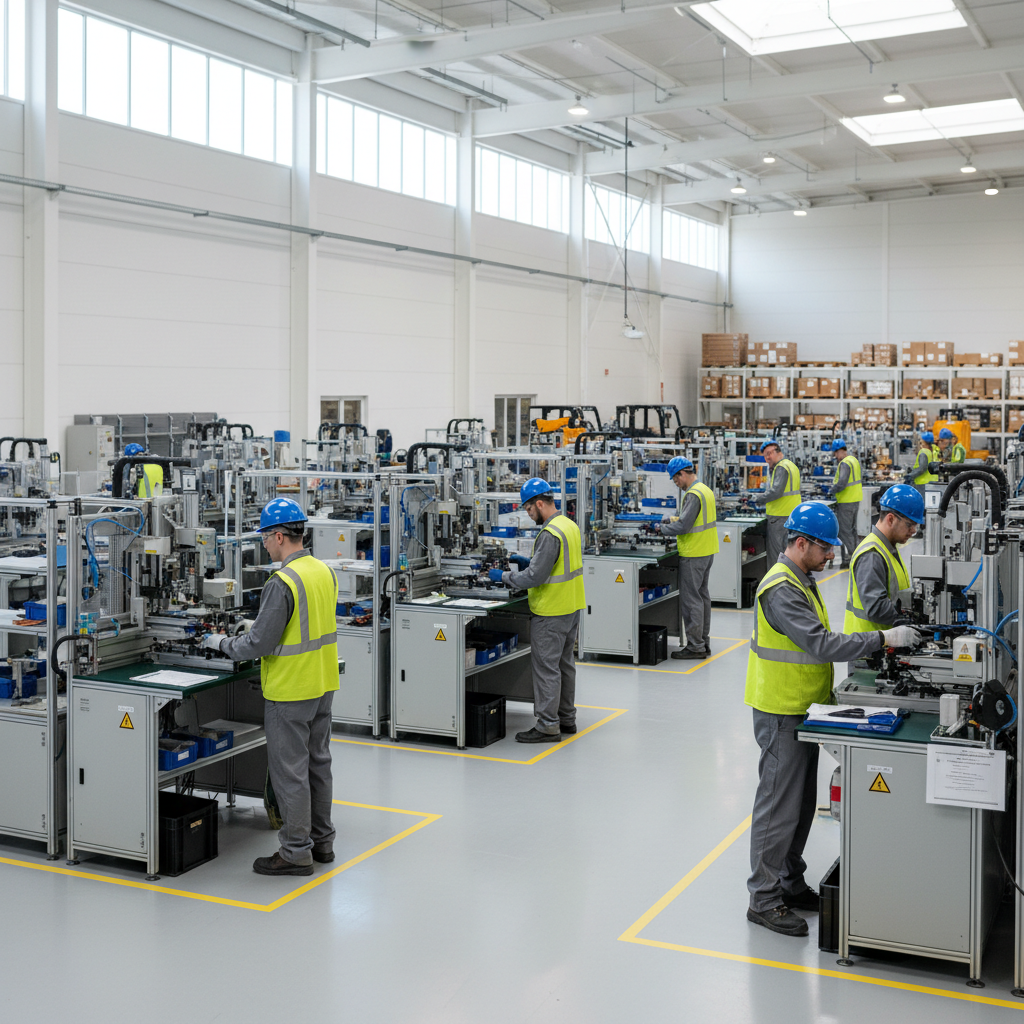
Why the turtle diagram matters: it forces you to name a single person (Dave) accountable for that process. It prevents outputs from being misunderstood (the welding team knows what "dimensionally verified" means because it's documented).
And it creates the basis for conversations about risk: *What happens if Dave is absent? What happens if the air supply fails? What happens if the material vendor sends non-certified steel?*
The Process Interaction Matrix
Once you have 8–12 turtle diagrams for your major processes, create a process interaction matrix. This is a simple grid:
Stamping Welding Painting Assembly Inspection Shipping Material Receipt X ← ← ← ← ← Stamping → X ← ← ← ← Welding ← → ← ← ← ← Painting ← ← → ← ← ← Assembly ← ← ← → ← ← Inspection ← ← ← ← → ← Shipping ← ← ← ← ← →
The arrows show information and material flow. A quick glance tells you: *Stamping depends on material receipt; welding depends on stamping and material receipt; painting depends on welding; inspection depends on everything upstream.*
This matrix is your early warning system. When a new process is added (say, a laser etching station for part traceability), you update the matrix. When a customer requirement changes, you trace which processes are affected. During internal audits, auditors trace nonconformances along these flows.
Process Owners: Assigning Real Accountability Without Creating New Titles
Here's where ISO implementation often derails at Canadian plants: someone decides every process needs a dedicated coordinator. Suddenly you have a "Materials Process Coordinator" and an "Inspection Process Coordinator," and the shop floor supervisor who actually runs the stamping press every day isn't involved.
Need guidance on your certification journey?
Our consultants have prepared more than 250 manufacturers globally — from growing businesses to large enterprises — for successful certification. Get a free, no-obligation consultation tailored to your industry.
The right question isn't: *Who should we hire?* It's: Who already owns this work?
At Precision Fabrications, the stamping process is owned by Dave, the shop supervisor. He's also responsible for scheduling, equipment maintenance sign-off, and operator break coverage. Dave wears multiple hats. That's reality at a 45-person shop.
The ISO 9001 process approach *acknowledges that reality instead of denying it*.
How to Assign Process Ownership Correctly
- Name the person already doing the work, not a new title.
- Define the scope clearly (what is Dave accountable for in the stamping process, and what's outside his scope?).
- Document any cross-functional dependencies (Dave coordinates with the quality inspector on first-piece acceptance; he doesn't make that decision alone).
- Give the owner authority to improve the process (Dave can suggest changes to the stamping SOP; he doesn't need four approvals).
- Hold the owner accountable to measurable KPIs (stamping first-pass yield, changeover time, preventive maintenance compliance).
Common Mistake to Avoid
Many plants make the quality manager the owner of every process. The reasoning is: "Quality touches everything." But that creates a bottleneck. The quality manager becomes the gatekeeper instead of the enabler.
Shop floor staff become passive—they execute procedures instead of owning outcomes.
The fix: Separate process ownership from quality assurance oversight. Dave owns the stamping process. The quality manager audits it, provides training and tools, and escalates systemic issues. But Dave is the one accountable for stamping output quality.
Did You Know? Many Canadian manufacturers under IATF 16949 (automotive) or ISO 13849-1 (machine safety) have already adopted process ownership as a survival mechanism. If your plant supplies automotive, that discipline should extend to your entire quality system, not just the Tier-1 line items.
Connecting the Process Approach to Risk-Based Thinking
This is the bridge between this chapter and Chapter 6 (Risk Management). You need to understand it now.
Clause 6.1 requires you to identify risks and opportunities related to your context and stakeholders. But risk identification doesn't happen in a conference room with Post-it notes. It happens naturally when you've mapped your processes.
Once you've defined your core stamping process with inputs, outputs, resources, and controls, the risk questions become concrete:
- Input risk: What if the material vendor ships non-certified coil? → Add supplier audit control.
- Resource risk: What if press #3 fails? → Add preventive maintenance plan and backup equipment.
- Control risk: What if the operator forgets the setup SOP? → Add job aids and machine-side signage.
- Output risk: What if stamped parts don't meet weld-fit requirements? → Add first-piece inspection gate and traceability.
When you work through the turtle diagram with a cross-functional team (shop floor, quality, planning, maintenance), risks surface naturally. You're not inventing risks—you're discovering them because you understand your process.
The process map becomes the input to your risk register. And that risk register drives your control strategy. This is why we recommend building your process map before you start writing risk registers—the sequence matters.
Important: If you skip the process map and jump straight to risk workshops, you'll end up with vague risks ("process failure") and vague controls ("improve training"). With a process map in hand, risks are specific: "stamping operator error due to unclear SOP" or "material traceability gap due to missing lot codes." And controls are proportional and auditable.
Key Takeaway: Your Process Map Is Your System Blueprint
By the end of this chapter, you should have:
- A list of 8–15 core, support, and management processes specific to your business.
- A turtle diagram for each process (or at least the critical ones).
- A process interaction matrix showing dependencies.
- Named process owners with clear scopes.
- A foundation for risk conversations in later chapters.
This isn't a one-time exercise. As your business grows or your customer base changes (new Tier-1 requirements, new product lines, new regulations from Health Canada or your provincial environmental ministry), you update the map. But the map gives structure to change instead of letting it happen haphazardly.
Everything that follows in this playbook—documentation, training, internal audits, corrective action, management review—references back to the process map you build here. That's why we spend a full chapter on it.
In Chapter 3, we'll take your process map and translate it into the documentation strategy that actually works.
ISO 9001 Implementation Playbook for Canadian Manufacturers 2026: Build a QMS That Actually Works
Why most implementations fail, who this playbook is for, and what a functional QMS actually means in 2026.
Chapter 2: Building Your ISO Documentation System: What Canadian Manufacturers Actually Need to Document in 2026
What you actually need to document, how to write work instructions people follow, and preventing document decay.
Request a Consultation
Fill in your details and we'll get back to you.