Chapter 7: Support Infrastructure — People, Competence, and Documentation (Clause 7)

Resources and Infrastructure (Clause 7.1)
Clause 7.1 addresses the resources needed to establish, implement, maintain, and improve the QMS. This includes people, infrastructure, environment for operation of processes, monitoring and measuring resources, and organizational knowledge.
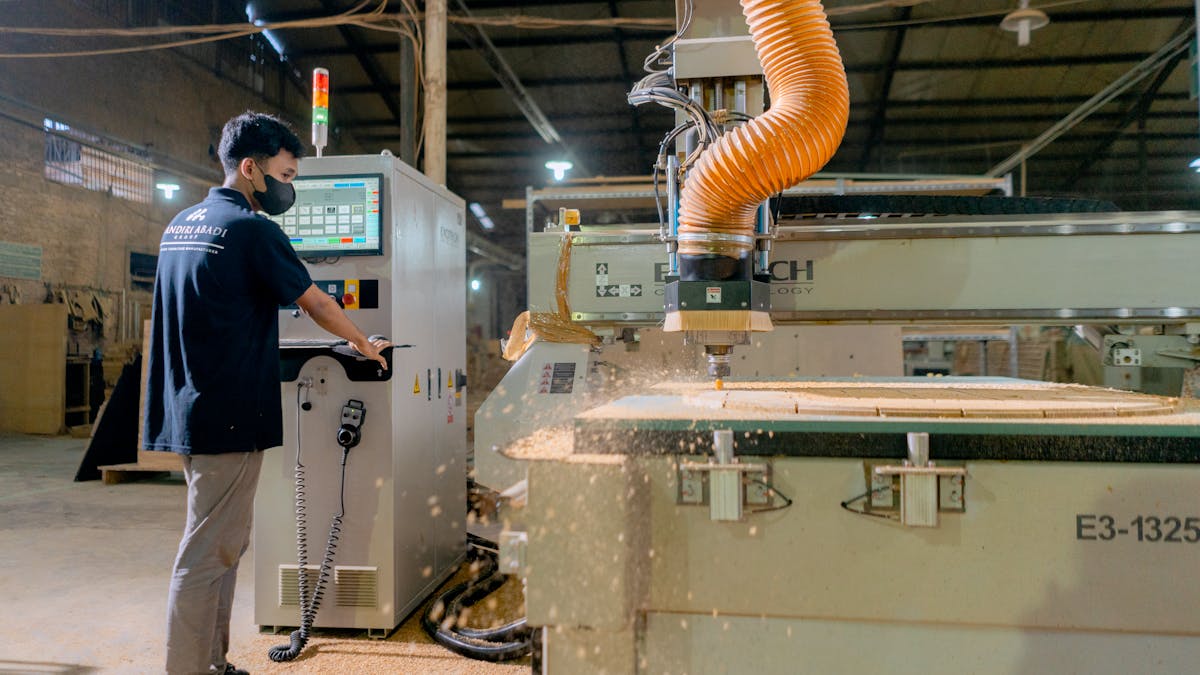
For a manufacturing operation like Maple Ridge, infrastructure includes production equipment, tooling, material handling systems, inspection equipment, IT systems, and the physical plant. The QMS must ensure these resources are adequate for achieving conformity. When Maple Ridge's stamping presses began showing increased dimensional variation due to wear, the QMS should have flagged this through monitoring data before it affected product quality. Instead, the equipment degradation was discovered through customer complaints — meaning the resource management process had failed.
Monitoring and measuring resources deserve particular attention. Clause 7.1.5 requires that measurement equipment be calibrated or verified at specified intervals, adjusted or re-adjusted as necessary, identified to determine calibration status, and safeguarded from adjustments that would invalidate results. At Maple Ridge, calibration management was initially handled through a spreadsheet that the quality manager updated manually. Instruments were sometimes used past their calibration due date because the spreadsheet was not checked daily. Implementing a calibration management system with automated due-date alerts and equipment status labels eliminated this gap.
Organizational knowledge (Clause 7.1.6) is often the most neglected resource in manufacturing. When Maple Ridge's senior tool and die maker retired, three decades of institutional knowledge about tooling setup, press adjustment, and troubleshooting departed with him. The QMS should capture and maintain organizational knowledge — not in a massive documentation effort, but through structured work instructions, mentorship programs, and knowledge transfer protocols that preserve critical operational expertise.
Competence and Training (Clause 7.2)
Need guidance on your certification journey?
Our consultants have prepared more than 250 manufacturers globally — from growing businesses to large enterprises — for successful certification. Get a free, no-obligation consultation tailored to your industry.
Clause 7.2 requires the organization to determine necessary competence for persons doing work that affects QMS performance, ensure those persons are competent based on education, training, or experience, take actions to acquire necessary competence, and retain documented information as evidence of competence.
At Maple Ridge, the training program initially consisted of a new-hire orientation and on-the-job training with no formal competency assessment. The assumption was that if an operator had been running a press for five years, competence was self-evident. This assumption failed when the backup operator produced nonconforming parts because no formal assessment had verified competency on that specific product family and press configuration.
Effective competency management for a manufacturer requires a competency matrix that maps each role to the specific skills required, a formal assessment process that verifies competency (not just attendance at training), documented evidence of competency for each person in each role, and a gap analysis that identifies where competency needs are not met. Maple Ridge implemented a skills matrix covering every production role and critical process. Each operator is assessed annually on the specific processes they perform. New process assignments require demonstrated competency before independent operation begins.
Documented Information Control (Clause 7.5)
Clause 7.5 governs how an organization creates, updates, and controls documented information — the documents and records that the QMS requires. This includes documents required by the standard, documents the organization determines are necessary, and records that provide evidence of conformity and effective operation.
The document control challenge for Canadian manufacturers typically scales with company size. For manufacturers under 50 employees like many of Maple Ridge's peers, a SharePoint or Google Drive implementation with disciplined version control provides adequate document control. The quality manager maintains a master folder structure with subfolders for the quality manual, procedures, work instructions, and records. Version control tracks changes through the platform's built-in revision history. All documents are locked for editing except the quality manager, and change requests go through a formal approval process before documents are revised, approved, version-bumped, and republished.
For manufacturers between 50 and 200 employees, a dedicated QMS software platform provides the structure needed for larger document volumes, more complex approval workflows, and multi-site operations. For manufacturers over 200 employees or those in heavily regulated industries like automotive (IATF 16949) or aerospace (AS9100), an enterprise document management system with integration to ERP and production systems becomes necessary.
Regardless of platform, the fundamental requirements remain the same: documents must be approved before use, current versions must be available at points of use, obsolete versions must be prevented from unintended use, and records must be legible, identifiable, and retrievable.
At Maple Ridge, the transition from paper-based document control to SharePoint required careful change management. The quality manager developed a master document register listing every controlled document, its current revision, approval authority, and distribution. All documents were migrated to SharePoint with consistent naming conventions and folder structures. Production floor workstations were equipped with tablets that provide read-only access to current work instructions. When an operator opens a work instruction, the system displays the current approved revision — eliminating the risk of obsolete documents at the point of use. Paper copies on the production floor were removed entirely, and the quality manager conducts monthly spot checks to verify that no unauthorized paper copies have reappeared.
Record retention is another area where Canadian manufacturers must be deliberate. ISO 9001 requires that records be maintained as evidence of conformity and effective QMS operation, but the standard does not prescribe specific retention periods. Retention periods should be defined based on customer requirements (automotive customers typically require seven to fifteen years), regulatory requirements (where applicable), statute of limitations considerations, and internal operational needs. Maple Ridge established a record retention schedule that maps each record type to a specific retention period, storage location, and disposal method.
Chapter 6: Planning for the QMS — Risk-Based Thinking in Practice (Clause 6)
Risk-based thinking is the defining characteristic of ISO 9001:2015 compared to its predecessor. Clause 6.1 requires the organization to determine risks and opp
Chapter 8: Operational Planning and Control — Where ISO 9001 Meets the Production Floor (Clause 8)
Clause 8 is where ISO 9001 becomes tangible on the production floor. Clause 8.1 requires the organization to plan, implement, and control processes needed to me
Request a Consultation
Fill in your details and we'll get back to you.