ISO 9001 Clause 9: Performance Evaluation, Internal Audit and Management Review
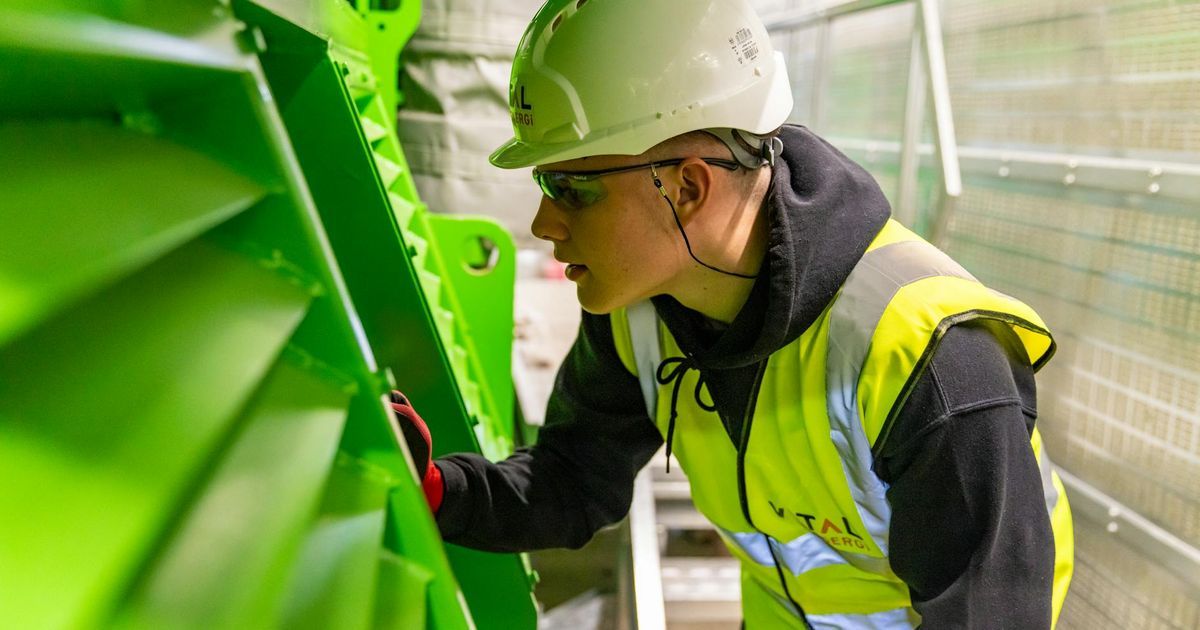
Clause 9 — Performance Evaluation — where the organization examines whether all this discipline is actually working.
Clause 9 — Performance Evaluation: The "Check" Before It Becomes a Crisis
John's company has planned carefully. It has executed under discipline. Processes are defined. Suppliers are controlled. Production runs under structured conditions.
Clause 9 now represents a critical shift.
This is where the organization checks whether the system is actually delivering the results it was designed to produce.
In the Plan–Do–Check–Act cycle that underpins ISO 9001:
- Clause 6 was Plan.
- Clause 8 was Do.
- Clause 9 is Check.
Without checking, planning becomes assumption and execution becomes routine.
Clause 9 forces the organization to pause and ask:
Are we improving — or just operating? Are problems reducing — or being tolerated? Is performance stable — or drifting slowly?
For John's company, this is the stage where leadership looks beyond daily output and evaluates system health — not through opinions, but through evidence. As the American Society for Quality notes, data-driven decision-making is one of the seven quality management principles that ISO 9001 is built upon.
Clause 9 ensures that weakness is discovered internally — not by the customer.
Now we move into 9.1, where that evidence becomes structured.
9.1 Monitoring, Measurement, Analysis and Evaluation — Turning Data into Insight
Monitoring is not about collecting numbers.
It is about identifying whether the system is healthy.
Clause 9.1 requires John's company to determine:
- What must be monitored
- How it will be measured
- When it will be measured
- How it will be analyzed and evaluated
This is structured visibility.
1. Determining What to Monitor
John cannot measure everything.
He must monitor indicators linked directly to risk and objectives — a discipline that connects directly to the risk-based thinking and planning requirements established earlier in the standard.
For example:
On-time delivery reflects operational stability. Scrap rate reflects production control. Customer complaint frequency reflects process reliability. Supplier rejection rate reflects external control strength. Calibration compliance reflects measurement integrity.
These indicators are not random metrics.
They are signals of system stability.
When scrap trends upward, production control is weakening.
When supplier rejection increases, 8.4 discipline needs attention.
Monitoring begins with choosing meaningful indicators.
2. Ensuring Reliable Measurement
Measurement must be consistent and repeatable.
In John's company:
Delivery performance is extracted from actual shipment records. Scrap data is logged daily from production reports. Inspection data is recorded digitally. Supplier performance is tracked during incoming inspection.
If data is captured inconsistently, conclusions become unreliable.
Measurement discipline ensures that decisions are based on facts — not impressions. For Canadian manufacturers specifically, the NIST Manufacturing Extension Partnership has documented how structured performance measurement consistently reduces quality escapes and rework costs at the SME level.
3. Analysis and Evaluation — Looking for Patterns
Collecting numbers is not enough.
John reviews trends monthly with his team.
Is scrap increasing gradually? Is delivery fluctuating under load? Is one machine generating disproportionate variation? Is one supplier responsible for repeated deviation?
A single incident may not signal weakness.
A pattern does.
Clause 9.1 requires the organization to interpret data, not just report it.
Evaluation turns numbers into insight.
Insight drives corrective action.
4. Monitoring Customer Satisfaction
Customer satisfaction is not limited to formal surveys.
In John's company, it includes:
Complaint frequency. Repeat order rate. Customer scorecards. Escalation frequency. Response time to issues.
If complaints decrease but repeat business drops, something deeper may be wrong.
If delivery is stable but communication complaints increase, reputation risk exists.
Customer perception must be monitored as carefully as production output.
Because performance without satisfaction does not create loyalty — a reality well understood by manufacturers who have studied the documented benefits of ISO 9001 for Canadian manufacturing operations.
Why 9.1 Matters
Without structured monitoring, performance drift goes unnoticed.
Without analysis, weak signals are ignored.
Without evaluation, leadership reacts too late.
Clause 9.1 ensures John's company detects instability before customers do.
This is not about reporting.
It is about awareness.
And awareness is the difference between reactive survival and controlled growth.
9.2 Internal Audit — Preventing System Drift
Monitoring data shows performance trends.
Internal audit verifies behavioral discipline.
Clause 9.2 exists because systems do not fail suddenly. They drift.
Procedures remain documented. Dashboards look acceptable. Certification stays on the wall.
But habits shift.
How Drift Begins
In John's company, everyone understands their roles.
John owns production. Mike owns quality. Mark owns procurement. Melissa owns sales.
Over time, pressure increases.
A supervisor allows a minor parameter adjustment without documentation. A technician bypasses a traceability label to save time. Procurement accepts a familiar supplier without formal re-evaluation. Calibration scheduling is postponed "just for this week."
None of these actions appear catastrophic.
Need guidance on your certification journey?
Our consultants have prepared more than 250 manufacturers globally — from growing businesses to large enterprises — for successful certification. Get a free, no-obligation consultation tailored to your industry.
Collectively, they weaken discipline.
Internal audit exists to detect that weakening.
Awareness and Responsibility Gaps
Clause 7 established awareness and defined roles — including the competence verification, training documentation, and communication requirements that underpin day-to-day discipline.
Clause 9.2 verifies whether those responsibilities are still active.
An audit might reveal:
Operators know the procedure — but no longer understand why it matters. A new technician was trained, but competency verification was not recorded. A department head assumes someone else is monitoring supplier trends. A quality objective exists, but the team cannot explain how daily work connects to it.
These are not documentation failures.
They are human-factor gaps.
Without audit, these gaps remain invisible.
Role Clarity Under Pressure
In one internal audit at John's company, a recurring issue surfaced.
When minor deviations occurred, operators corrected them informally rather than escalating to Mike. They believed it was efficient.
However, this bypassed the nonconformity control process.
No one was intentionally negligent.
Responsibility boundaries had blurred.
The audit re-established clarity:
Who authorizes changes. Who evaluates risk. Who approves deviations. Who documents actions.
Internal audit protects role clarity before confusion becomes culture.
Why External Perspective Strengthens Discipline
Familiarity reduces sensitivity.
Internal teams may unconsciously normalize shortcuts.
An external auditor reviewing John's company once identified that supplier performance reviews were being discussed verbally but not formally documented. The team believed the process was controlled.
Objectively, it was not.
That observation prevented exposure before a major customer audit. The Canadian Manufacturers & Exporters association has highlighted supplier performance documentation as one of the most common failure points discovered during third-party quality audits across Canadian industrial sectors.
Periodic third-party internal audits provide:
Independent scrutiny. Industry-level benchmarking. Objective questioning of assumptions.
They reveal blind spots internal teams stop seeing.
Continuous Identification of Nonconformities
Internal audit is not the only trigger for improvement.
Daily nonconformity reporting must remain active.
If a calibration gap appears, action occurs immediately. If a training lapse is detected, competency is reassessed immediately. If traceability weakens, correction happens immediately.
Audit verifies discipline.
It does not replace accountability.
Waiting for audit to discover known weaknesses signals cultural fragility.
Why 9.2 Is Critical
Internal audit protects:
Awareness. Role clarity. Accountability. Cultural discipline.
Without it, systems drift quietly under operational pressure.
With it, leadership gains truthful visibility into behavioral alignment — not just documentation status.
If internal audits in your organization feel repetitive or surface only minor issues year after year, a deeper evaluation may be required.
We conduct structured internal audits — including independent third-party reviews — designed to identify execution-level and human-factor gaps before they impact customer confidence. Contact us to strengthen your internal audit process and restore discipline where it matters.
9.3 Management Review — Leadership That Doesn't Wait for Problems
By the time John's company reaches Clause 9.3, production is running, suppliers are monitored, audits are performed, and KPIs are visible.
Now leadership must step back and evaluate the whole system.
Management review is not a ceremonial meeting.
It is not a formality to satisfy certification.
It is where leadership validates whether the ISO 9001 quality management system is strengthening the business — or slowly drifting.
The Real Purpose of Management Review
Management review exists to answer one core question:
Is the system still aligned with reality?
Markets change. Customer expectations evolve. Volume increases. New employees join. Equipment ages.
The management system must adapt.
In John's company, management review ensures that what was planned months ago still supports current conditions.
It connects strategy to execution.
Reviewing the Right Inputs
During management review, leadership examines structured inputs:
Delivery performance trends. Scrap and rework patterns. Customer complaints and feedback tone. Supplier stability and rejection data. Internal audit findings. Status of corrective actions. Risk register updates. Resource constraints — people, equipment, capacity.
But reviewing numbers alone is not enough.
Leadership must revisit previous decisions.
If overtime was increased last quarter to meet delivery targets, did it improve stability — or increase fatigue risk?
If a supplier was placed under monitoring, has performance improved — or is instability recurring?
If training was conducted, has competence improved measurably?
Decisions made in the last review must be evaluated for effectiveness.
Otherwise, management review becomes documentation — not governance.
Timely Decisions — Not Waiting for the Next Meeting
Management review is structured and periodic.
But leadership discipline is continuous.
If scrap suddenly spikes this month, John does not wait until the next quarterly review.
If supplier performance drops sharply, Mark escalates immediately.
If customer complaints show a pattern, Melissa raises it without delay.
The review formalizes learning.
It does not delay action.
Strong leadership responds in real time and then evaluates strategically during management review.
Human and Organizational Factors
Metrics may look stable.
But leadership must also examine human dynamics.
In John's company, one review revealed that delivery targets were being met — but overtime hours were rising steadily.
Fatigue risk was increasing.
Technicians were operating under sustained pressure.
While KPIs appeared healthy, sustainability was weakening.
Management review must ask:
Are responsibilities still clear? Is awareness fading? Are process owners overloaded? Is workload affecting discipline? Are objectives understood across departments?
These questions protect long-term stability.
Because systems drift through people — not spreadsheets.
Outputs — Decisions That Move the System Forward
A strong management review results in action.
Adjusted objectives. Reallocated resources. Investment in equipment. Additional training. Updated risk controls. Improved supplier oversight.
Not simply meeting minutes.
In John's company, management review once led to:
Hiring an additional technician to reduce overtime dependency. Revising inspection sampling frequency based on trend analysis. Reallocating capital to replace aging equipment affecting variability.
That is leadership in motion.
Why Clause 9.3 Matters
Clause 8 controlled execution. Clause 9 verified performance.
Clause 9.3 ensures leadership remains accountable for both.
For small manufacturers, management review is not a corporate ritual — it is a structured way to stay ahead of instability, much as described in the ISO 9001 for small manufacturers series that explores how these disciplines translate to lean operational environments.
When leadership actively engages in management review, the system evolves.
When leadership disengages, the system stagnates.
And stagnation is rarely visible — until customers notice. When Clause 9 reveals what needs to change, Clause 10 is where the improvement cycle completes — translating those findings into permanent corrective action.
ISO 9001 Clause 8: Operations — From Contract Review to Product Release
Control operational processes from contract review through product release and delivery.
ISO 9001 Clause 10: Improvement — Where the Cycle Completes
Close the loop with corrective actions and continual improvement that compounds over time.
Request a Consultation
Fill in your details and we'll get back to you.