ISO 22000 vs FSSC 22000: Complete Comparison for North American Food Manufacturers (2026)
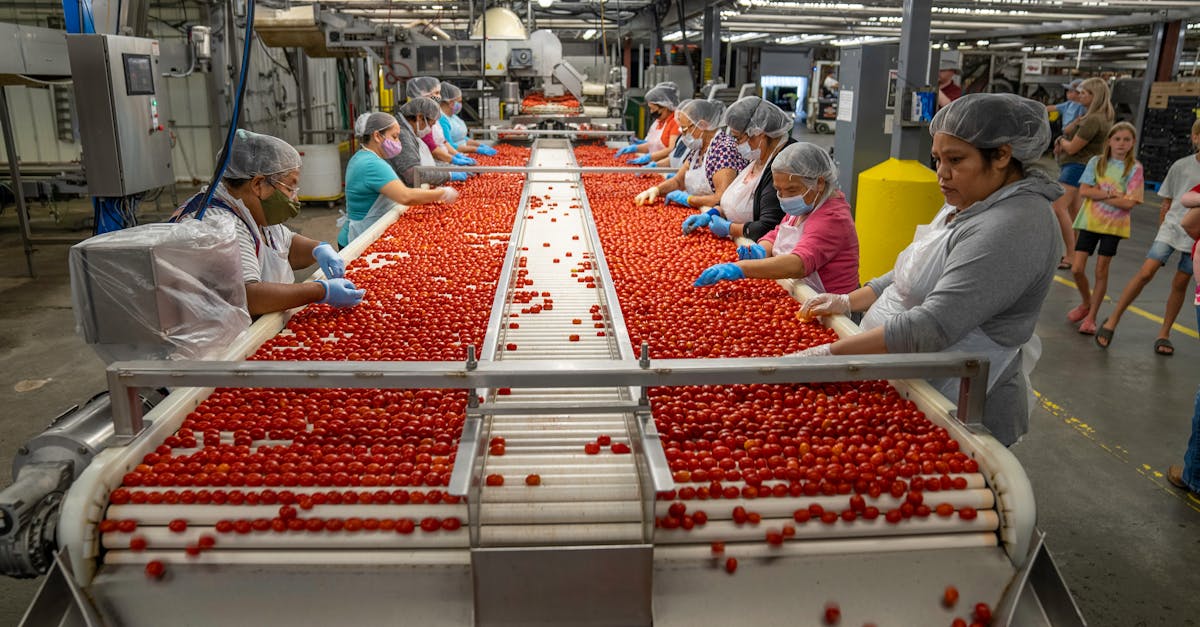
ISO 22000 is the international food safety management system standard. FSSC 22000 is a Global Food Safety Initiative (GFSI) certification scheme built on top of ISO 22000 plus sector-specific prerequisite programmes (PRPs) and additional FSSC requirements. The practical difference: most major food retailers, foodservice distributors, and CPG buyers — Costco, Walmart, Loblaws, Sobeys, Kroger, Sysco, US Foods — require GFSI-recognized certification before they will source from a manufacturer. ISO 22000 alone is not GFSI-recognized. FSSC 22000 is. That single fact drives the choice for roughly 80% of North American food manufacturers across the PinnacleQMS client base.
This guide explains what each standard actually requires, which one your customers are asking for, what each costs in Canadian and US dollars, and how to migrate cleanly from ISO 22000 to FSSC 22000 if you started with the wrong one.
Quick comparison table
| Dimension | ISO 22000:2018 | FSSC 22000 v6 (2024) |
|---|---|---|
| Issuer | International Organization for Standardization | Foundation FSSC (Netherlands-based, GFSI member) |
| GFSI recognition | No | Yes |
| Base standard | ISO 22000:2018 | ISO 22000:2018 |
| Prerequisite programmes | Generic (defined by organization) | Sector-specific ISO/TS 22002-x |
| Additional FSSC requirements | None | Yes (food-defense, food-fraud, environmental monitoring, allergen mgmt, etc.) |
| Audit days | Lower (1.0x base) | Higher (~1.3x base, including unannounced surveillance) |
| Certificate validity | 3 years | 3 years |
| Typical implementation cost (NA) | CA$15,000 – CA$40,000 / US$12,000 – US$32,000 | CA$25,000 – CA$60,000 / US$20,000 – US$48,000 |
| Typical registrar fees | CA$8,000 – CA$15,000 / US$6,000 – US$12,000 | CA$12,000 – CA$25,000 / US$10,000 – US$20,000 |
| Typical implementation timeline | 4-7 months | 6-10 months |
| Customer mandate coverage | Some smaller customers, some EU and Asian markets | Required by most major NA retailers, foodservice, and CPG buyers |
| Best fit | Small co-packers serving single-customer or non-GFSI markets | Manufacturers selling into major retailers, foodservice, and multi-customer supply chains |
The summary: ISO 22000 is technically valid but commercially insufficient for the customer base most North American food manufacturers actually need to win.
What ISO 22000:2018 covers
ISO 22000:2018 is the universal food safety management system (FSMS) standard published by ISO. It uses the Annex SL high-level structure shared with ISO 9001 and ISO 14001 — context, leadership, planning, support, operation, performance evaluation, improvement — and integrates HACCP (Hazard Analysis and Critical Control Points) principles into clause 8 (operation).
The standard requires:
- Context and scope (clause 4) — define the food chain segments the FSMS covers, identify interested parties (customers, regulators, suppliers, employees).
- Leadership and policy (clause 5) — top-management commitment, food safety policy, defined roles and responsibilities, food safety team appointment.
- Planning (clause 6) — risks and opportunities register addressing food safety, FSMS objectives, planning of changes.
- Support (clause 7) — resources, infrastructure, work environment (including hygiene zones), externally developed elements, traceability systems, emergency preparedness, competence, awareness, communication, documented information control.
- Operation (clause 8) — operational planning and control including PRPs, traceability, emergency preparedness, hazard analysis, validation of control measures, HACCP plan, operational PRPs (OPRPs), monitoring, verification, control of nonconforming product, withdrawal/recall procedures.
- Performance evaluation (clause 9) — internal audits, management review, monitoring and measurement.
- Improvement (clause 10) — corrective action, continual improvement, FSMS update.
What ISO 22000 does NOT prescribe is the specific PRPs you need to implement. The standard requires PRPs to be in place but defers to sector-specific documents (ISO/TS 22002-1 for food manufacturing, ISO/TS 22002-2 for catering, ISO/TS 22002-3 for farming, ISO/TS 22002-4 for packaging, etc.) for the technical detail. ISO 22000-only certificates rarely include audit verification of the sector-specific PRPs at the level of rigor a major retailer expects.
That gap is what FSSC 22000 closes.
What FSSC 22000 adds on top of ISO 22000
FSSC 22000 (Food Safety System Certification 22000) is a certification scheme — not a separate standard — published by Foundation FSSC. The scheme is built on three pillars:
- ISO 22000:2018 — the underlying FSMS framework.
- Sector-specific PRP standard — ISO/TS 22002-1 for food manufacturers, ISO/TS 22002-4 for food packaging manufacturers, ISO/TS 22002-2 for catering, etc. The PRP standard is mandatory and audited.
- FSSC additional requirements — currently 14 specific clauses covering management of services, product labelling, food defense, food fraud mitigation, allergen management, environmental monitoring, transport and delivery, food safety culture, quality control, control of food loss and waste, communication with authorities, control of organism contamination, design and development, and use of FSSC logo.
The additional requirements were updated in version 6 (2024) and are non-negotiable for FSSC certification. They are also the primary reason FSSC 22000 audits are roughly 30% longer than ISO 22000 audits — auditors physically verify food defense vulnerability assessments (TACCP), food fraud vulnerability assessments (VACCP), environmental monitoring programmes for pathogens (Listeria, Salmonella), and allergen segregation across the facility.
FSSC 22000 is recognized by the Global Food Safety Initiative (GFSI), the industry body whose recognition is required by major retailers and foodservice operators. ISO 22000 alone is not GFSI-recognized — Foundation FSSC publishes the additional requirements specifically to close the gap GFSI requires.
Customer-mandate reality check — who actually requires which
The strongest signal driving the ISO 22000 vs FSSC 22000 decision is your customer's supplier requirements. Major North American buyers and their typical positions:
| Buyer | Requirement |
|---|---|
| Walmart (US + Canada) | GFSI-recognized scheme — FSSC 22000, BRCGS, SQF, or PrimusGFS |
| Costco (US + Canada) | GFSI-recognized scheme |
| Loblaws / Sobeys / Metro / Empire (Canada) | GFSI-recognized scheme for private-label and most branded suppliers |
| Kroger / Albertsons / Publix | GFSI-recognized scheme |
| Sysco / US Foods / Performance Food Group | GFSI-recognized for major suppliers |
| McDonald's / Tim Hortons / A&W | SQF or FSSC 22000, increasingly FSSC for new suppliers |
| Whole Foods | GFSI-recognized scheme |
| Most food-service distributors | GFSI-recognized scheme |
The pattern is consistent. If your sales pipeline includes any of these buyers — directly or as a co-packer — you need a GFSI-recognized certification, which means FSSC 22000, BRCGS, SQF, or PrimusGFS, NOT ISO 22000 alone.
ISO 22000 alone fits a narrower customer profile: smaller regional buyers, ingredient suppliers selling into non-retail channels, exporters into markets where FSSC is not yet established (parts of Latin America, Africa, Southeast Asia), and manufacturers using ISO 22000 as a stepping stone toward FSSC 22000 within a planned 12-24 month window.
Cost and timeline comparison
Realistic ranges based on PinnacleQMS engagements with North American food manufacturers across Toronto, Mississauga, Hamilton, Montreal, Vancouver, Detroit, Chicago, Atlanta, and the broader US food manufacturing belt:
ISO 22000 alone
| Item | CAD range | USD range |
|---|---|---|
| Implementation (consulting + platform) | CA$15,000 – CA$40,000 | US$12,000 – US$32,000 |
| Registrar fees (Stage 1 + Stage 2 + Y1 surveillance) | CA$8,000 – CA$15,000 | US$6,000 – US$12,000 |
| Annual surveillance (Y2, Y3) | CA$3,000 – CA$6,000 | US$2,500 – US$5,000 |
| Typical timeline | 4-7 months | 4-7 months |
FSSC 22000
| Item | CAD range | USD range |
|---|---|---|
| Implementation (consulting + platform) | CA$25,000 – CA$60,000 | US$20,000 – US$48,000 |
| Registrar fees (Stage 1 + Stage 2 + Y1 surveillance) | CA$12,000 – CA$25,000 | US$10,000 – US$20,000 |
| Annual surveillance (Y2, Y3) | CA$5,000 – CA$10,000 | US$4,000 – US$8,000 |
| Typical timeline | 6-10 months | 6-10 months |
The FSSC 22000 premium over ISO 22000 alone runs roughly 50-60% higher on implementation and registrar fees. The ROI is straightforward: if FSSC 22000 unlocks customer revenue you cannot otherwise win, the payback is usually a single new contract.
Decision criteria — when to choose each
Pick ISO 22000 alone if:
- Your customers are smaller regional buyers with no GFSI requirement.
- You sell exclusively into non-retail channels (industrial ingredients, foodservice with no major-chain exposure).
- You are exporting primarily to markets where FSSC is not yet established.
- You plan to use ISO 22000 as a pre-FSSC stepping stone within a planned 12-month window.
Pick FSSC 22000 if:
- Any of your target buyers list "GFSI-recognized scheme" in their supplier requirements.
- You sell to major North American retailers, foodservice distributors, or branded CPG companies.
- You are expanding from regional to national distribution.
- Your insurance carrier or lender is asking about food safety certification.
- You want one certification that covers most North American buyers without piecemeal supplier audits.
For most NA food manufacturers, FSSC 22000 is the right answer the first time. Skipping ISO 22000 alone and going directly to FSSC 22000 saves the cost and time of a later upgrade.
Migrating from ISO 22000 to FSSC 22000
Manufacturers who started with ISO 22000 and now need GFSI recognition do not have to re-build the FSMS. The migration path is straightforward:
- Gap analysis against FSSC additional requirements. A consultant or internal team maps the existing FSMS against the 14 FSSC additional requirements and the sector-specific PRP standard (typically ISO/TS 22002-1 for food manufacturers).
- PRP audit and remediation. ISO/TS 22002-1 covers building construction, layout, utilities, waste disposal, equipment suitability, supplier management, measures for prevention of cross-contamination, cleaning and sanitizing, pest control, personnel hygiene, rework, product recall, warehousing, product information, food defense, biovigilance, and bioterrorism. Existing PRPs get audited and gaps closed.
- Food defense, food fraud, and environmental monitoring programmes. TACCP and VACCP assessments, environmental monitoring programme for pathogens (sample plan, swab routes, action limits, corrective action procedures).
- Food safety culture programme. A required FSSC element — formal mechanism for measuring and improving food safety culture across the workforce.
- Allergen management plan upgrade. Beyond ISO 22000 baseline — facility-wide allergen mapping, validated cleaning, segregated production, dedicated equipment where required.
- Updated documentation. Document control system tagged for both ISO 22000 and FSSC additional requirements.
- Internal audit and management review. Run internal audits against the full FSSC scope before the registrar arrives.
- Certification audit. Stage 1 + Stage 2 with an FSSC-licensed certification body.
Total migration time for a manufacturer already running an ISO 22000 system in good standing: typically 3-5 months. Cost: roughly the difference between the ISO 22000 and FSSC 22000 implementation ranges above (CA$10,000 – CA$25,000 / US$8,000 – US$20,000 incremental).
Frequently Asked Questions
Is FSSC 22000 always better than ISO 22000?
Not always. For manufacturers selling exclusively into non-GFSI channels, ISO 22000 may be sufficient and the FSSC premium is wasted spend. The decision should follow customer requirements, not generic "better" reasoning.
Can a manufacturer hold both ISO 22000 and FSSC 22000?
FSSC 22000 includes ISO 22000 as a subset, so a single FSSC certificate satisfies any customer asking for either. There is no value in holding both as separate certificates.
How does FSSC 22000 v6 differ from v5?
Version 6 (2024) tightened requirements around food safety culture, equipment management, food loss and waste, and digital records. Existing v5 certificates remain valid until their next surveillance audit, at which point they migrate to v6.
Does Health Canada or the FDA require either certification?
Neither Health Canada nor the FDA mandates ISO 22000 or FSSC 22000 specifically. Both are voluntary. However, FSMA preventive controls and Health Canada's Safe Food for Canadians Regulations both recognize GFSI-certified facilities for reduced inspection frequency in some cases.
Which certification body should a manufacturer choose?
For FSSC 22000, only FSSC-licensed certification bodies can issue the certificate. Major options in North America include SGS, Bureau Veritas, DNV, NSF, and SAI Global. For ISO 22000 alone, any ANAB- or SCC-accredited registrar can certify.
Can FSSC 22000 cover multiple sites under one certificate?
Yes. FSSC 22000 supports multi-site certification under the same legal entity, with a sampling-based audit approach for sites with similar processes. Multi-site is significantly cheaper than separate certifications per facility.
Talk to a PinnacleQMS specialist
Across 250+ certifications including ISO 22000 and FSSC 22000 implementations for food and beverage manufacturers across Canada and the US, PinnacleQMS clients pass first-attempt audits at a 98% rate. The 6-stage process is the same for ISO 22000 and FSSC 22000 — only the depth of PRP and additional-requirements work differs.
To scope your specific facility, customer base, and timeline, contact PinnacleQMS to know more. The team will explain which certification fits before quoting cost.
For more on the broader ISO certification process, see the main process page, the PinnacleQMS compliance platform, the ISO 9001 service overview (the foundation many food manufacturers add to their ISO 22000), and the manufacturing industry page for cross-sector context.
External authoritative references used in this guide include the ISO 22000:2018 standard at iso.org, the Foundation FSSC scheme, the Global Food Safety Initiative (GFSI) recognition criteria, FDA FSMA preventive controls regulations, the CFIA Safe Food for Canadians Regulations, ANAB accreditation listings, and SCC accreditation listings for verifying that any FSSC-licensed certification body holds current accreditation.
Request a Consultation
Fill in your details and we'll get back to you.